Family Board Games for Game Night: Fantastic Picks for All Ages
The best family board games for game night are the ones that fit the people around your table: a quick card game for a short evening, a team challenge for a…

The best family board games for game night are the ones that fit the people around your table: a quick card game for a short evening, a team challenge for a lively group, or a light strategy game for a longer visit. Here are well-loved picks for different moods, plus Khayaal Cards, a new, faith-inspired deck from Tales of Khayaal. Age suggestions and play times are guides rather than guarantees, so consider your family’s tastes and how much game-night energy everyone has.
| If your table wants… | Try… | Why it may fit |
|---|---|---|
| A quick, lively round | Sushi Go! | Pick-and-pass card drafting, with a short play time |
| A big-group laugh and wordplay | Codenames | Teammates work together to interpret clues |
| A map to build together | Carcassonne | Create a landscape tile by tile |
| An accessible route-planning challenge | Ticket to Ride | Collect train cards and connect cities |
| A colourful, gentle strategy puzzle | Azul | Draft tiles and plan where they go |
| A lore-rich card game in development | Khayaal Cards | Hand-drawn characters and three modes in development |
Quick fillers: easy to bring to the table
Sushi Go!: a speedy pick-and-pass game
In Sushi Go!, everyone chooses a card from their hand, reveals it, then passes the remaining cards along. The fun is in spotting a useful combination before the next player takes it. Gamewright lists it for ages 8+, two to five players, and about 15 minutes.
It’s a handy choice when you want a quick game that keeps everyone making decisions. Younger players may appreciate a first round with a grown-up explaining what different card combinations do.
Skyjo: simple number decisions for a crowd
Skyjo is a card game for families who prefer a straightforward aim: try to end up with a low score. Players reveal and exchange cards as they go, making small choices that can change their plans. It can accommodate a larger group than many compact card games, which makes it worth considering for a gathering with cousins or grandparents.
Khayaal Cards: a new, story-rich entry
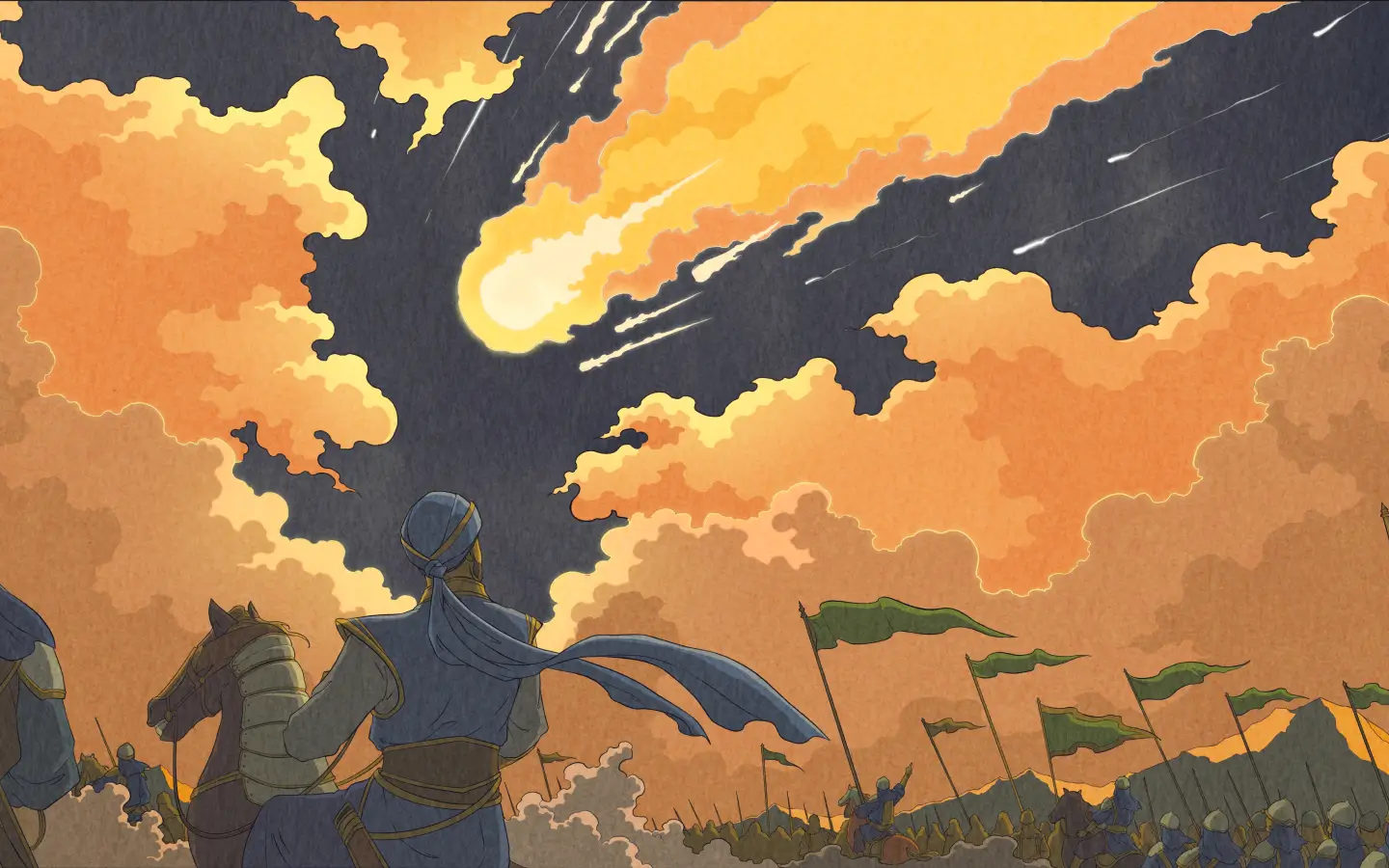
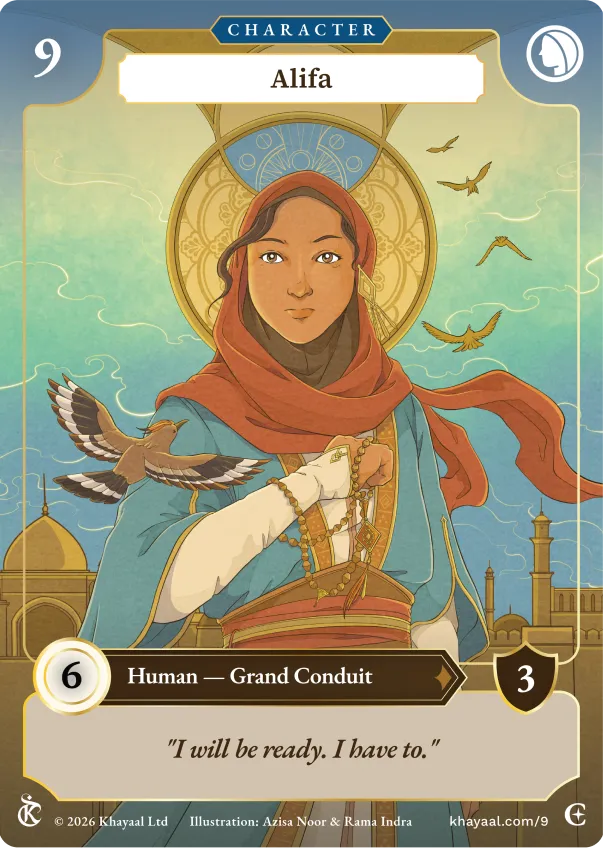
If your family enjoys fantasy worlds as much as game night, Khayaal Cards offers another kind of table experience. It is a 54-card deck for two to four players, with three modes in development: Truth and Falsehood, Conduit Clash and Pledge of Allegiance. The cards feature human-drawn art inspired by the Khaverse, the fantasy universe of Tales of Khayaal.
It’s an emerging option rather than a long-established classic, and its modes are still in development. The deck is currently available to early supporters through the crowdfund. The wider Khaverse includes the novel Tales of Khayaal: Arön, already out, and Tales of Khayaal: Cin, coming next. The full Khayaal tabletop role-playing game is also in early development/pre-alpha; it is not a finished game.
Team play: talk, clue and guess
Codenames: clues that bring a team together
In Codenames, two teams compete to identify their agents from a grid of word cards. Each team’s spymaster offers a one-word clue and a number; teammates discuss which cards might fit. Choose carefully: the wrong guess can end a turn, and picking the assassin means the game is over.
It’s a lively option for groups who enjoy wordplay and interpreting one another’s ideas. One distinction for families seeking co-operative games: Codenames has teamwork within each team, but the teams compete against one another. The standard game is listed for ages 10+, four to eight or more players, and around 15 minutes.
If your priority is a game where everyone is on the same side against the game itself, check the rules and format before buying: that isn’t the standard Codenames experience.
Strategy-light: satisfying choices without a long rules lecture
Carcassonne: build a shared landscape
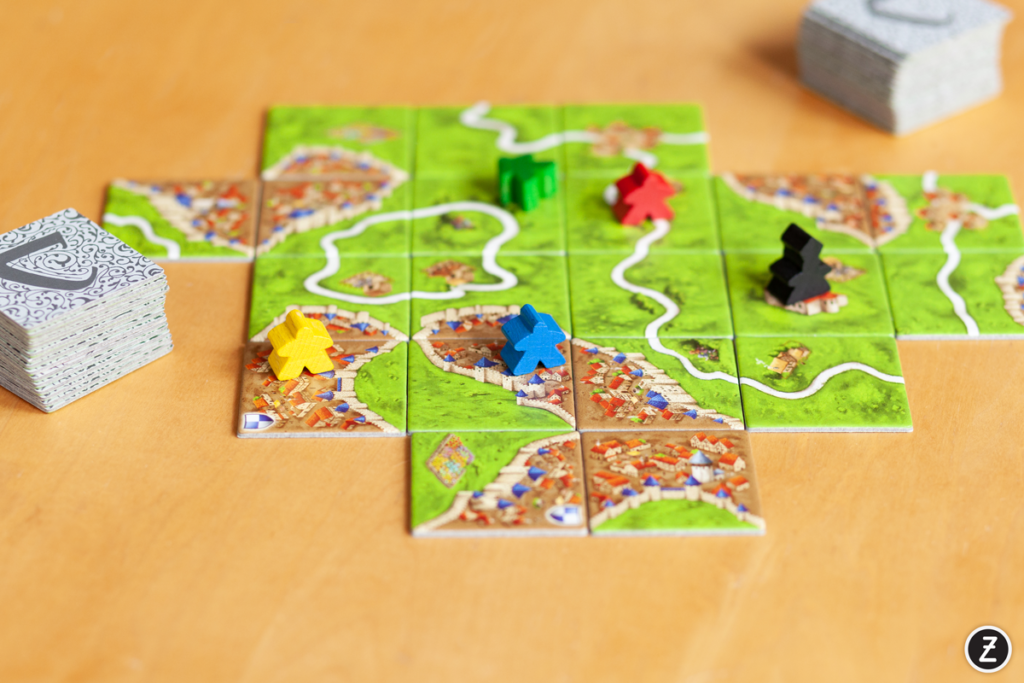
In Carcassonne, players draw and place landscape tiles, gradually forming roads, cities, monasteries and fields. Followers can claim features for points, so a simple tile placement can turn into a small strategic decision: score now, or wait and see how the landscape grows?
It’s a good fit for families who like spatial puzzles and a board that changes every time they play. There is some friendly competition over scoring, so it suits tables that enjoy a little tactical blocking as well as building.
Ticket to Ride: plan a route across the map
Ticket to Ride asks players to collect train cards and claim railway routes between cities. The rules are accessible, but choosing which routes to pursue gives the game a satisfying layer of planning. Days of Wonder lists the base game for ages 8+, two to five players, and 30–60 minutes.
It works especially well when your group wants a longer game with a clear goal. Players can pursue their own routes while keeping an eye on the network others are building.

Azul: arrange a pattern, think ahead
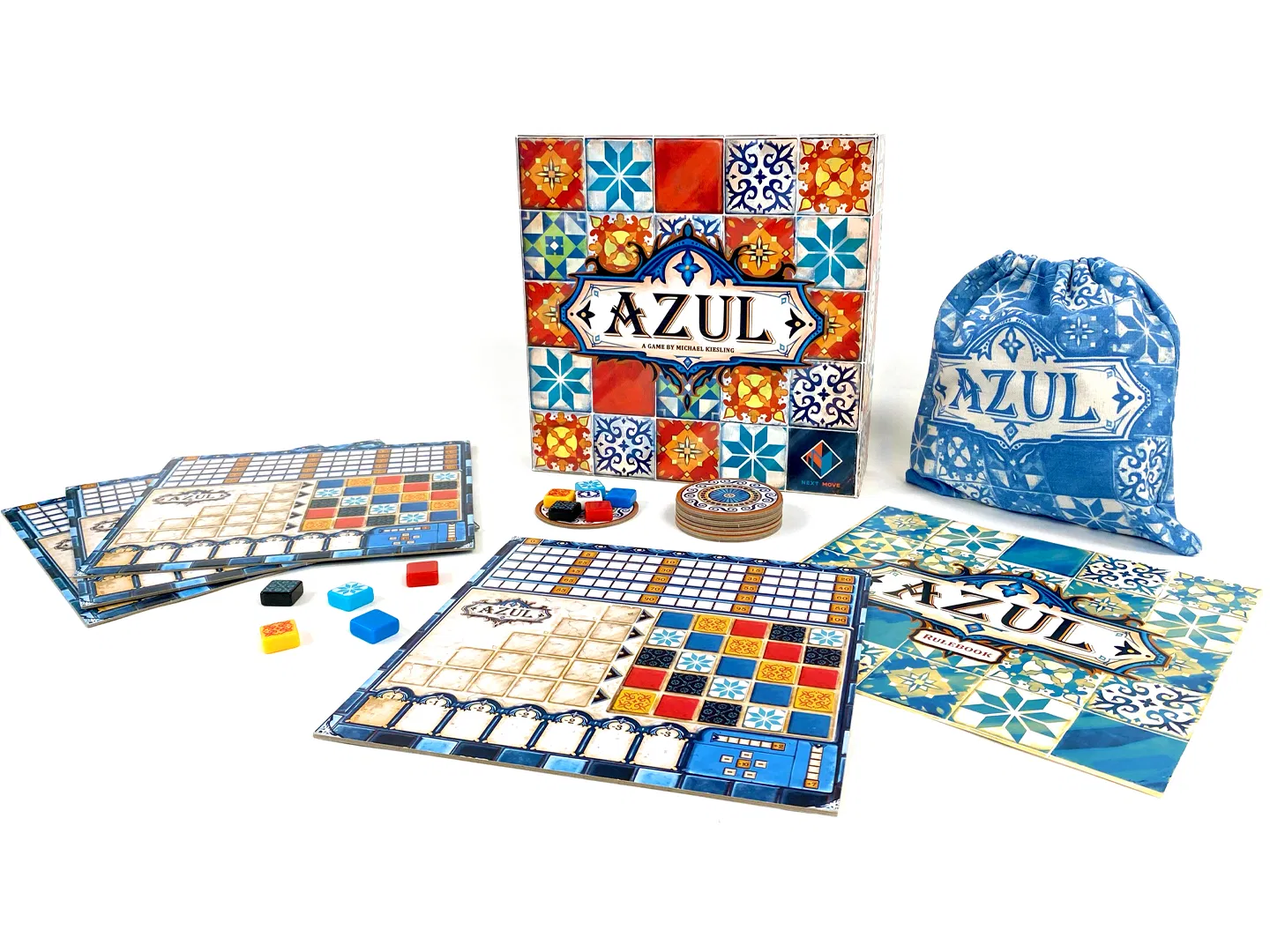
In Azul, players draft colourful tiles and place them into patterns on their boards. The appeal is part visual puzzle, part planning: a choice that looks lovely may not be the one that helps your score most. The publisher lists it for ages 8+, two to four players, and 30–45 minutes.
Azul is a strong pick when your family enjoys thoughtful turns and tactile pieces, but doesn’t want a sprawling rulebook. It’s competitive, so it may be less suitable for a group looking for a purely co-operative experience.
Splendor: build an engine one turn at a time
In Splendor, players collect gem tokens and use them to buy development cards. Those cards provide bonuses that make later purchases easier, so the game gradually shifts from gathering resources to building an efficient little engine. Space Cowboys lists it for ages 10+, two to four players, and about 30 minutes.
It’s a nice next step for a family that has enjoyed simpler games and is ready for a bit more planning. Turns are brief, but it’s worth thinking ahead: a card you want may not stay available for long.
How to choose the right game for your family
Start with the table, not the box. How many people are playing? Do they enjoy words, patterns, maps or quick card choices? Is everyone happy with competition, or would the group rather work together? A game listed for children from age eight may still feel tricky to a younger player, while a familiar adult might find a recommended age more comfortable than a first-time player does.
A short game can also be a useful way to begin the evening; a map-building or strategy game can follow if everyone wants to stay at the table. And if a faith-inspired fantasy setting would feel welcome in your home, Khayaal Cards brings a new imaginative world into the mix without presenting itself as religious instruction. Tales of Khayaal draws inspiration from spiritual concepts and diverse Muslim cultures, while inviting readers and players of any background into the story.
Bring Khayaal Cards to your game night
Khayaal Cards is for families curious about a new entry in the world of table games: a 54-card deck, designed for two to four players, with three modes currently in development. The deck’s hand-drawn characters come from the same universe as Arön and the upcoming Cin. It is a developing card game, not the full Khayaal TTRPG, which remains in pre-alpha.
If this is the kind of story-led game you’d like to discover, back the Tales of Khayaal crowdfund by 30 December 2026. Early supporters get Book Two, exclusive merch and the card game.
Frequently asked questions
What are good family board games for a short game night?
Sushi Go! is a quick pick-and-pass option, while Codenames offers short rounds built around word clues. Check the player count and age guidance against your group.
Is Khayaal Cards an Islamic card game?
It is a faith-inspired fantasy card game from a universe shaped by spiritual concepts and diverse Muslim cultures. It is not a religious ruling, lesson or quiz, and it welcomes players of any background.
Is Khayaal Cards an RPG card game?
It is a 54-card game for two to four players, with Truth and Falsehood, Conduit Clash and Pledge of Allegiance in development. The separate Khayaal TTRPG is still in early development/pre-alpha, not a finished release.

Join the Khayaal Circle
We invite you to join a growing community of like-hearted Khayaalis in the next phase of our journey. Sign up for exclusive updates, sneak peeks and join playtesting communities and become part of the community to receive meaningful updates.