
Islamic Fantasy Books: A Reader's Guide to Faith-Inspired Epic Fiction
Islamic fantasy books bring together fantasy storytelling and ideas, settings or cultural influences connected to Muslim lives and traditions.
Islamic fantasy books bring together fantasy storytelling and ideas, settings or cultural influences connected to Muslim lives and traditions. The shelf is broad: some novels draw on jinn and other strands of Islamic and regional folklore; others build worlds inspired by Middle Eastern history or ancient Arabia. Some, like G. Willow Wilson’s Ms. Marvel, are not fantasy novels at all, but offer a memorable Muslim hero in comics.
That range matters. “Islamic fantasy” is a useful search term, not a single genre rulebook. These books differ in how they approach faith, folklore, culture and invented worlds. Welcome, seeker: here is a guide to a few well-established places to begin, and a new world to explore.
First, a note on labels
Terms such as Islamic mythology, Muslim fantasy books and Middle Eastern fantasy books are often used as if they mean the same thing. They do not. Islam is a living faith with diverse communities and traditions; “Middle Eastern” covers many peoples, places and histories. A novel may be written by a Muslim author without being about Islam, or draw on regional folklore without representing Muslim belief.
The books below are best approached on their own terms: as fiction shaped by particular sources and creative choices, not as a complete portrait of any faith or culture.
A reader’s map: folklore, inspired worlds and comics
| If you’re looking for… | Try… | What to expect |
|---|---|---|
| A sweeping saga with djinn, politics and folklore | The City of Brass and the Daevabad Trilogy | A richly layered epic drawing on Islamic legends and Middle Eastern history |
| YA adventure in an ancient-Arabia-inspired world | We Hunt the Flame and We Free the Stars | A two-book quest with magic, danger and a central pair of heroes |
| Contemporary fantasy and technology | Alif the Unseen | A cyberpunk adventure entangled with Middle Eastern mythology |
| An adult, swashbuckling fantasy | Throne of the Crescent Moon | Monster-hunting, political tension and an Arabian Nights-inflected setting |
| A Muslim superhero in comics | Ms. Marvel: No Normal | Kamala Khan’s coming-of-age story in the Marvel Universe |
| A deep well of story traditions | The Thousand and One Nights | A layered, composite collection that has influenced generations of fantasy |
For an epic of djinn and courtly intrigue
S. A. Chakraborty’s The City of Brass begins the completed Daevabad Trilogy, followed by The Kingdom of Copper and The Empire of Gold. Its heroine, Nahri, is a Cairo-based con artist who discovers that the magical world she thought belonged to stories is perilously real. Djinn, rival communities and political struggles draw the trilogy into a hidden city where power and belonging are never simple.
The series is a confident choice for readers who want intricate worldbuilding and a long-form fantasy journey. Its inspirations are specific and richly researched, but the imagined society is still a work of fiction, not a stand-in for every Muslim history or experience. Read more about the trilogy’s setting and influences.
For a YA quest inspired by ancient Arabia
Hafsah Faizal’s We Hunt the Flame and sequel We Free the Stars make up the Sands of Arawiya duology. In a world inspired by ancient Arabia, hunter Zafira and Prince Nasir confront magic, danger and the demands placed upon them by their kingdom. The first book begins a quest to restore magic to a suffering land; its sequel brings the story to a close.
These are good picks for readers who enjoy youthful protagonists, high-stakes adventure and a secondary world with its own atmosphere. Pan Macmillan’s pages for the first book and the sequel offer further details.
For myth meeting modern technology
In G. Willow Wilson’s Alif the Unseen, a young Arab-Indian hacker in an unnamed Middle Eastern security state finds his struggle against surveillance crossing into the uncanny. A forbidden text, jinn and the digital world collide in a novel that moves between political thriller and fantasy.
It’s a particularly distinctive choice if you’re curious about fantasy books with spiritual themes that don’t leave the present day behind. The publisher describes it as a blend of cyberpunk adventure and Middle Eastern mythology. Explore the book at Grove Atlantic.
For swordplay, monsters and an Arabian Nights-inflected world
Saladin Ahmed’s Throne of the Crescent Moon follows an ageing ghul hunter, Doctor Adoulla Makhslood, and a band of companions amid supernatural murders and political unrest. Its Crescent Moon Kingdoms combine monsters, magic and a vivid city setting, with influences that include Arabic and Persianate storytelling traditions.
This is a strong starting point for readers who want an adult fantasy adventure with a classic band-of-heroes feel. Penguin Random House has the book’s description and edition details.
For a contemporary Muslim superhero
G. Willow Wilson’s Ms. Marvel: No Normal is a comic collection, not a fantasy novel. It introduces Kamala Khan, a Pakistani-American Muslim teenager from Jersey City who discovers she has extraordinary powers and takes up the Ms. Marvel name. The story explores identity and family through a superhero lens; it’s a useful companion recommendation for readers looking for Muslim characters in popular genre fiction. See the collected edition.
The older story-world behind many modern fantasies
No guide to the genre’s influences would be complete without The Thousand and One Nights, also known in English as The Arabian Nights. This is not a single-authored modern novel, but a composite story collection formed through layered traditions, including Arabic, Persian and Indian narratives. Its frame story and tales of wonder have travelled across languages and centuries.
The collection’s history is complex, and it should not be reduced to a simple label or treated as a direct map of Islamic belief. Still, its storytelling legacy (enchanted journeys, clever survivors, uncanny encounters and tales nested within tales) has helped shape what many readers recognise as fantasy. Modern writers continue to build original worlds from a wide range of sources, not just from this one.
A new world to step into: the Khaverse
For readers ready to leave our world behind, Tales of Khayaal: Arön (Book One) opens a door into the Khaverse. It is an original fantasy setting inspired by Islamic cosmology and the spiritual idea of khayaal, imagination, rather than a representation of Islam or Muslim life. Co-creators Rehan Khan (writer and loremaster) and Peter Gould (designer) bring that vision to life through a high-stakes story and human-drawn art.
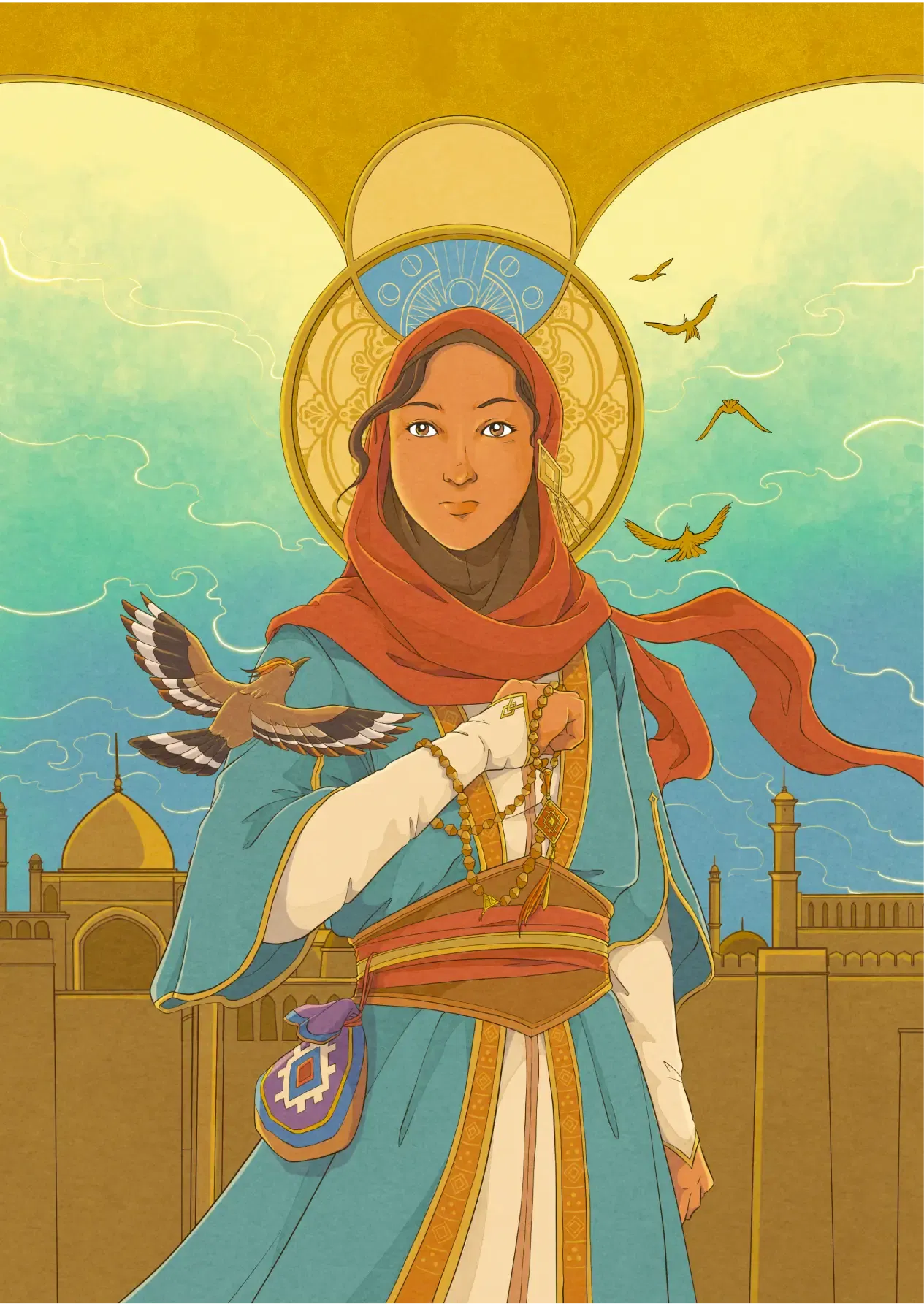
On Ikleel, in the closing period of its third epoch, Alifa begins as a medical assistant. Her path changes when she becomes a Nurani Conduit: a wielder of Kha, power that flows from the Source through the Isthmus. The world’s Conduits are divided between Nurani, who serve the Creator, and Dhulmi, who are corrupt. Their abilities include healing, calming, threading and revealing: powers that shape not only battles, but choices and responsibilities.
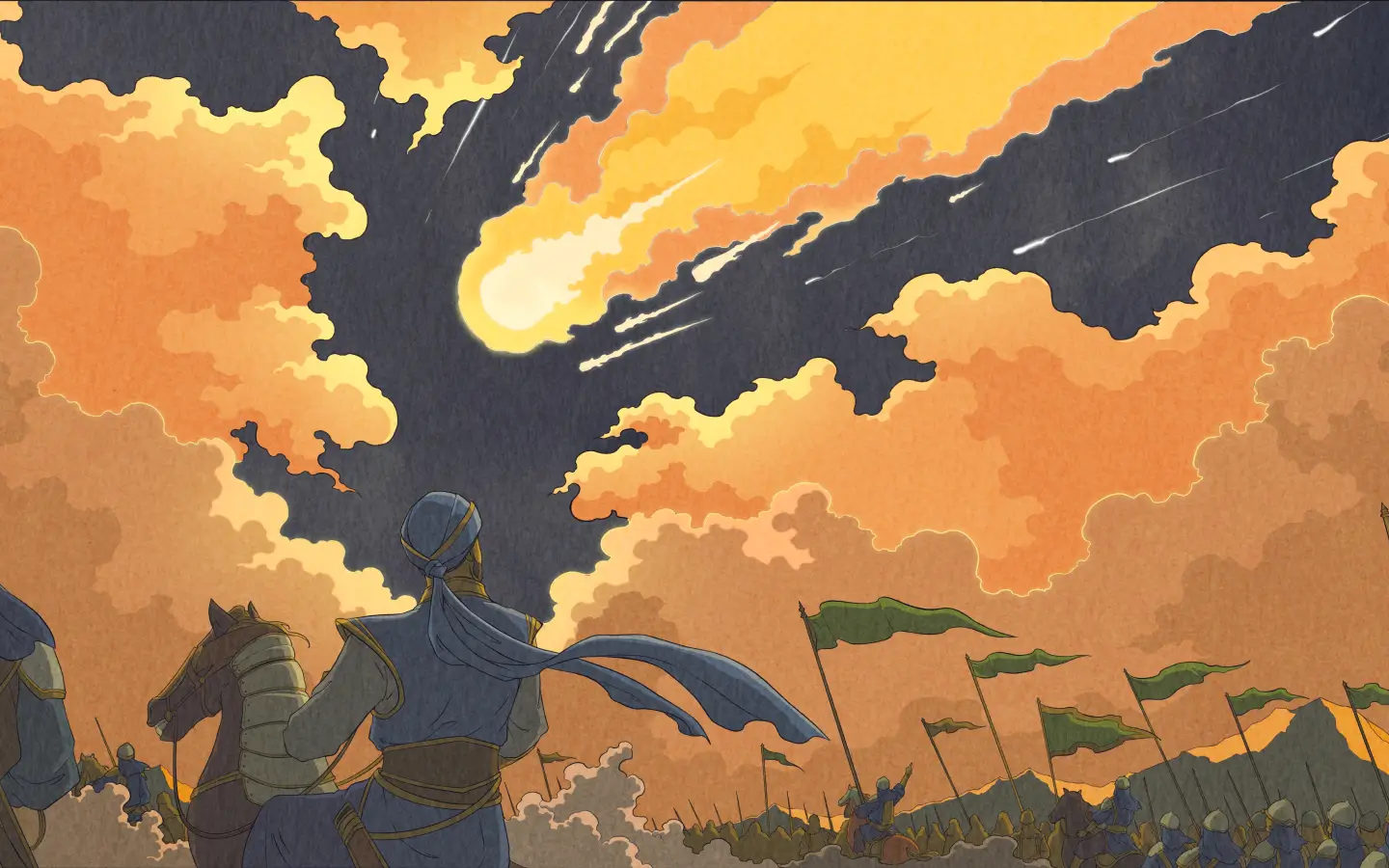
A comet signals the approach of the Final Standing and Mörtan’s return. Known as the Corroder of Hearts, he is a threat rooted in the Khaverse’s ancient conflict. Meanwhile, the Syndicate’s grip on Arön puts its people and inheritance at risk. The scale is epic; the questions are close to the heart: what does it mean to serve, to protect, and to hold on to what matters when the world is changing?
The artwork for Book One is being refreshed with new illustrations. It’s a fitting part of a project built around art drawn by human artists, rather than AI-generated images.
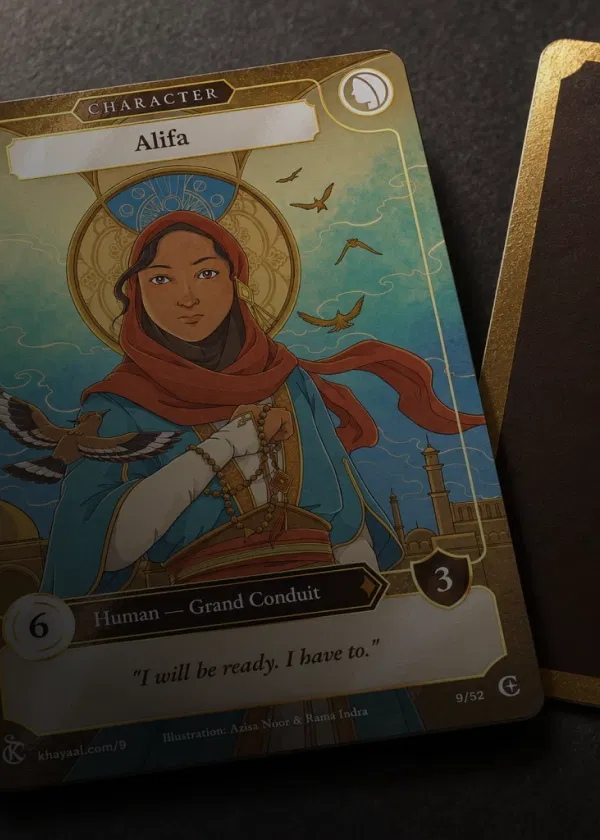
Book Two, Tales of Khayaal: Cin, is coming through the Khayaal crowdfund, which ends 30 December 2026. Early supporters can receive Book Two, exclusive merchandise and Khayaal Cards: a 54-card game for two to four players. One Goodreads reviewer has described the series as “Assassin’s Creed meets Dune and The Lord of the Rings”: a reader’s comparison, rather than a promise of the same kind of story.
Take your first steps into the Khaverse
If you’d like to see whether Alifa’s journey is for you, read the first five chapters of Tales of Khayaal: Arön free at khayaal.com/read. If the world calls to you, you can also explore the Book Two crowdfund, open until 30 December 2026.
Frequently asked questions
Are Islamic fantasy books suitable for non-Muslim readers?
Yes. Many are written for a broad fantasy audience. They offer invented worlds, compelling characters and cultural or spiritual influences that readers can approach with curiosity and respect.
Is Ms. Marvel an Islamic fantasy book?
Not exactly. Ms. Marvel: No Normal is a superhero comic featuring Kamala Khan, a Muslim teenager. It is included here as a relevant genre story with a Muslim lead, not as a fantasy novel.
Where should I begin if I want a fantasy series?
For djinn, folklore and political intrigue, try The City of Brass. For YA quest fantasy, start with We Hunt the Flame. If you’d like an original, spiritually inspired world with human-drawn art, sample the opening chapters of Tales of Khayaal: Arön.